How to choose a sewing machine for beginners: features that matter
Last checked: November 27, 2026. This guide is based on research of public sources. We did not test any product.
Short answer
- Start with what you will sew. New Mexico State University and the Home Sewing Association both say to match the machine to your projects, not to the stitch count.
- A first machine needs a straight stitch, a zigzag, a buttonhole, and reverse. Singer says beginners mostly need straight, zigzag, and buttonhole stitches.
- Mechanical and computerized machines both work for learning, says Singer. Mechanical machines use dials. Computerized machines add a screen, push-button stitch choice, and more stitches.
- Sew on each machine before you buy, with your own fabrics. Ask what the warranty covers, where repairs are done, and whether lessons come with it.
Start with what you will sew
New Mexico State University Extension says to think about what you will sew first: clothing, mending, or decorative work. Also think about where you will use and store the machine. It says a good machine can last 20 years or more. Source [1]
The Home Sewing Association says more stitches do not mean a better machine. If you do not see a use for them, buy fewer stitches and trade up later. New Mexico State says the top model is not always the right buy for the money. Source [2] Source [1]
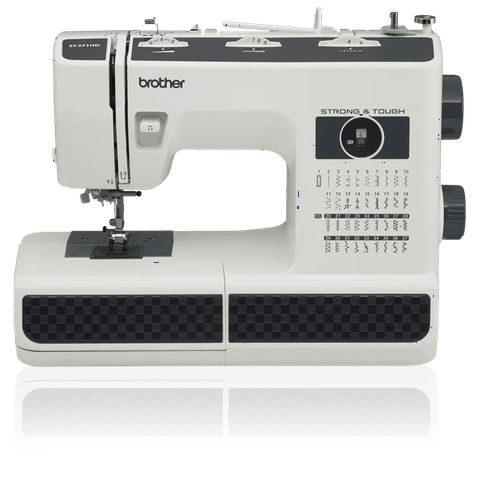
If you will sew denim, canvas, or upholstery, Singer says a heavy duty machine is a strong choice. It says these machines have stronger motors and faster speeds, but you do not need one to learn on cotton. Examples are the Janome HD3000 and the Singer Heavy Duty 4423. Source [3]
Mechanical vs computerized
| Point | Mechanical | Computerized |
|---|---|---|
| How you choose a stitch | A dial | Buttons or a touchpad, with an LCD or LED screen |
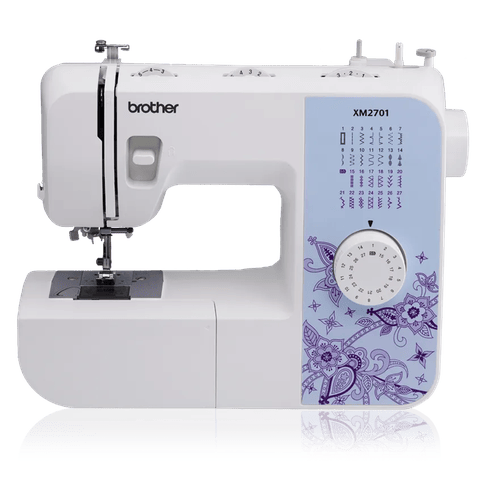
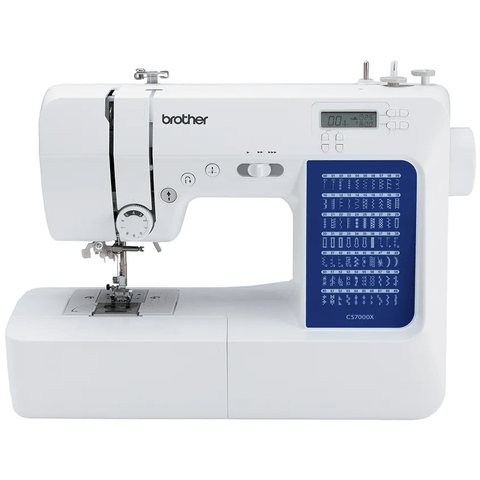
| Stitches built in | Janome 2212: 12. Brother XM2701: 27. | Brother CS7000X: 70. New Mexico State says dozens to hundreds. |
| Buttonhole | Janome 2212: one four-step buttonhole. Brother XM2701: one one-step buttonhole. | Brother CS7000X: seven styles of one-step, auto-size buttonholes |
| Stitch settings | You set length and width by hand | Width, length, and density are preset for each stitch, and you can change them |
| What Singer says | Straightforward, durable, and lower in cost | Can help as your skills grow |
Sources for this table: Source [3] Source [1] Source [4] Source [5] Source [6]
Singer says either type is a good way to learn, and the choice comes down to preference. New Mexico State says computerized machines use electronic chips in place of mechanical parts. Source [3] Source [1]
The Home Sewing Association says computerized and electronic machines let you move the needle position to the left or right. If you buy a machine with a screen, it says to check that the screen is clear and large enough to read. Source [2]
Features that matter on a first machine
- Basic stitches. The Home Sewing Association lists straight, zigzag, blindhem, mending, and buttonhole stitches, plus reverse to lock seams. Singer adds a stretch stitch to its list of essentials. Source [2] Source [3]
- Adjustable stitch length and width. Singer lists both. The Home Sewing Association says to note the maximum length and width; the Janome 2212 goes to 4 mm long and 5 mm wide. Source [3] Source [2] Source [4]
- A buttonhole for your fabrics. The Home Sewing Association says to look for one buttonhole for wovens and one for knits. Check if the machine sets the size or you do. Source [2]
- Bobbin type. Singer says a top drop-in bobbin is easier to load and watch than a front-loading one. The Brother XM2701 has a top drop-in bobbin. The Janome 2212 loads from the front. Source [3] Source [5] Source [4]
- Needle threader. Singer calls an automatic needle threader a major time-saver. The Home Sewing Association says it helps most if vision or dexterity is a concern. Source [3] Source [2]
- Free arm. Singer says a free arm helps with sleeves and cuffs. Brother says the same of the CS7000X. Source [3] Source [6]
- Speed control. Singer says a speed control helps you learn safely. Brother lists adjustable speed control on the CS7000X. Source [3] Source [6]
- Drop feed. The Home Sewing Association says lowering the feed dogs lets you sew free-motion, darn, and bartack. The Janome 2212 and the Brother CS7000X both have drop feed. Source [2] Source [4] Source [6]
- Presser feet. The Home Sewing Association says you need a multipurpose foot, a zipper foot, and a buttonhole foot. Add a blindhem foot if the machine has a hemming stitch. Source [2]
Test before you buy
The Home Sewing Association says to sew on every model and brand you are considering. Take a wide range of fabric samples and threads to the store, and test several stitches on each machine. Source [2]
New Mexico State gives the same advice. Try every fabric type that you normally sew, and try the fancy stitches. Check that the stitches are even and the machine is easy to use. Source [1]
Warranty, repairs, and lessons
- Find out what the warranty covers and for how long, and whether the dealer or the maker honors it. The Home Sewing Association asks whether it covers parts and labor or only defects. Source [1] Source [2]
- Ask where repairs are done and how long they take. New Mexico State says the wait can be days or weeks, and repairs by a technician who is not factory-authorized can void the warranty. Source [1]
- Keep the box and the packing. New Mexico State says you may need them to ship the machine for repairs. Source [1]
- Ask about lessons. New Mexico State says independent shops often offer lessons and in-store repairs, and some models are sold only through dealers who give classes. Source [1] Source [2]
If you buy a used machine
- Ask how the machine was cared for. Look for few or no scratches or dents. Source [1]
- Check that no parts are missing and that the bobbins and the zipper foot come with it. Source [1]
- Check that the foot control works easily and that the belts and the wiring are in good condition. The machine should run smoothly, without heavy vibration or noise. Source [1]
Questions people ask
- Should a beginner get a mechanical or computerized sewing machine?
Either works, says Singer. It calls mechanical machines straightforward, durable, and lower in cost. Computerized machines add a screen, push-button stitch choice, and more stitches, which can help as your skills grow. Source [3]
- How many stitches does a beginner sewing machine need?
Singer says beginners mostly need three: straight, zigzag, and buttonhole. It also names a stretch stitch as a common essential. The Home Sewing Association says more stitches do not mean a better machine. Source [3] Source [2]
- Is a heavy duty sewing machine good for beginners?
Singer says it is a strong choice if you plan to sew heavy fabrics such as denim, canvas, or upholstery. It also says you do not strictly need one to learn on simple cotton. Source [3]
- Is a drop-in or front-loading bobbin easier for a beginner?
Singer says a top drop-in bobbin is easier to load and to watch than a front-loading bobbin. The Brother XM2701 has a top drop-in bobbin. The Janome 2212 loads from the front. Source [3] Source [5] Source [4]
- Do I need a serger as a beginner?
No. The Home Sewing Association says a serger does not replace a sewing machine, and it answers the question of need with probably not. Buy a sewing machine first. Our sewing machine vs serger guide explains the difference. Source [7]