Single needle vs multi needle embroidery machines
Last checked: November 26, 2026. This guide is based on research of public sources. We did not test any product.
Short answer
- A single needle machine holds one thread color. The operator changes the thread at each color change. A multi needle machine keeps a color on each needle and changes color by itself.
- The two multi needle machines in our guides reach 1,000 and 1,200 stitches per minute and include a cap kit. The two single needle machines reach 400 and 650.
- A single needle machine fits hobby use and occasional embroidery. A multi needle machine fits regular orders, caps, and designs with many colors.
- Each multi needle machine in our guides has a maker list price more than three times that of each single needle machine.
Single needle or multi needle: the short answer
A single needle machine holds one thread color at a time. At each color change, the operator changes the thread before the machine continues. A multi needle machine keeps a different color on each needle and moves to the next needle by itself. Source [1]
Echidna Sewing says single needle machines suit hobby use and occasional embroidery. It points people who embroider regularly, or who plan a business, to multi needle machines. Source [1]
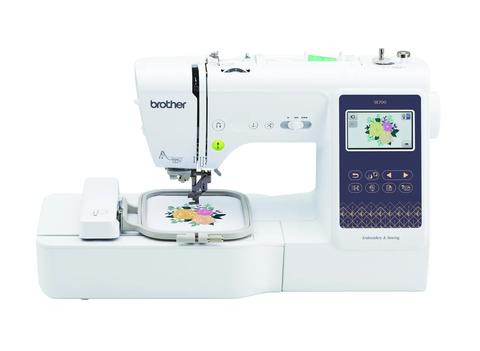
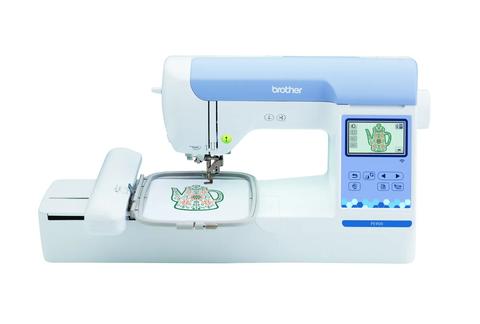
Our guides cover two machines of each type. Brother SE700 and Brother PE900 are single needle machines. PooLin EOM has 15 needles, and Smartstitch S-1001 has 10. Source [2] Source [3] Source [4] Source [5]
Color changes and speed
PooLin describes the EOM as 15 colors on 15 needles with automatic color change. The machine also cuts the thread when a color is complete. Source [4]
Top speed differs too. The SE700 manual gives a maximum embroidery speed of 400 stitches per minute, and Brother lists 650 for the PE900. PooLin lists 1,000 stitches per minute for flat items and 850 for caps. Smartstitch lists up to 1,200. Source [6] Source [7] Source [4] Source [5]
Top speed is only part of the difference. Echidna Sewing says the largest time saving comes from fewer interruptions. The PE900 has a function that changes the stitch order of a design to decrease the color changes. Source [1] Source [7]
Embroidery area, caps, and tube-shaped items
The embroidery area is 4 x 4 inches on the SE700 and 5 x 7 inches on the PE900. It is 14 x 9.5 inches on the PooLin EOM and 9.5 x 14.2 inches on the Smartstitch S-1001. Source [8] Source [7] Source [9] Source [4] Source [5]
Echidna Sewing says cap embroidery is generally not available on most domestic machines. The PooLin EOM box includes a cap driver, a cap station, and two cap hoops. Smartstitch lists a standard cap driver for the S-1001. Our guide to hats on a single needle machine gives the details. Source [1] Source [10] Source [5] Source [11]
Multi needle machines have a tubular arm. Sleeves, bags, and other tube-shaped items slide around the arm. On a flatbed machine, the second layer of fabric can get trapped below the hoop. Source [12] Source [1]
The four machines side by side
| Spec | Brother SE700 | Brother PE900 | PooLin EOM | Smartstitch S-1001 |
|---|---|---|---|---|
| Type | Single needle, sewing and embroidery | Single needle, embroidery only | Multi needle | Multi needle |
| Needles | 1 | 1 | 15 | 10 |
| Maximum speed (stitches per minute) | 400 | 650 | 1,000 (850 on caps) | 1,200 |
| Maximum embroidery area | 4 x 4 in | 5 x 7 in | 14 x 9.5 in | 9.5 x 14.2 in |
| Cap kit in the box | No | No | Yes | Yes |
| Weight | About 15 lb | About 17.6 lb | 176 lb on the US store, 75 kg on the European site | 93 lb |
| Design file formats | PES, PHC, DST, PEN | PES, PHC, DST, PEN | DST, DSB | DST, DSB |
Sources for this table: Source [6] Source [8] Source [7] Source [13] Source [2] Source [3] Source [9] Source [4] Source [10] Source [5] Source [11] Source [14]
Space, weight, learning, and upkeep
The SE700 is a tabletop size: 16.5 inches wide and about 15 lb. The Smartstitch S-1001 weighs 93 lb. PooLin lists the EOM at 176 lb on its US store and 75 kg on its European site. The PooLin box includes a stand, and one S-1001 owner reports that its base has wheels. Source [6] Source [5] Source [9] Source [4] Source [10] Source [15]
A multi needle machine takes more learning at the start, but Echidna Sewing says many beginners become comfortable quickly. One S-1001 owner, who came from a single needle machine, reports that the size and the threading intimidated her at first. In owner reviews of the PooLin EOM on Trustpilot, thread tension is a repeated complaint. Source [1] Source [15] Source [16]
Upkeep differs. The SE700 manual says the user must not oil the machine, because the factory applied the necessary oil. As a contrast, Melco's lubrication schedule for its AMAYA embroidery machine asks for oil on the rotary hook every 200,000 stitches. The Smartstitch warranty lists machine oil, needles, bobbin cases, and rotary hooks as consumables. Source [6] Source [17] Source [18]
File formats differ as well. The two Brother machines read PES and DST files. The PooLin and Smartstitch machines read DST and DSB, and Smartstitch does not supply design software. Our guide to PES and DST files explains the conversion. Source [6] Source [13] Source [4] Source [11]
Which type fits a home business
For paid orders, the sources point to a multi needle machine. John Deer of Embroidery Legacy writes that a single needle machine runs one color at a time, and the stops for color changes decrease productivity. PooLin names home businesses and small shops as the users of the EOM. Source [12] Source [4]
The same writer gives a warning. A cheaper commercial machine can come with tension problems and a steep learning curve. Source [12]
The price gap is large. Each multi needle machine in our guides has a maker list price more than three times that of each single needle machine. Each machine guide shows the maker list price and its source. Design software is a separate cost for the Smartstitch S-1001, because the maker supplies none. Source [8] Source [7] Source [14] Source [9] Source [11]
Questions people ask
- Is an embroidery machine worth it?
That depends on the planned use. Echidna Sewing says a single needle machine suits hobby use and occasional embroidery, and a multi needle machine suits regular work or a business. Each multi needle machine in our guides has a maker list price more than three times that of each single needle machine. Source [1] Source [8] Source [7] Source [14] Source [9]
- Which type of embroidery machine fits a small business or a home business?
John Deer of Embroidery Legacy recommends a multi needle machine for a home business in the long run. He says the color-change stops of a single needle machine decrease productivity. PooLin names home businesses and small shops as the users of its 15-needle EOM. Source [12] Source [4]
- Can a single needle embroidery machine do hats?
Echidna Sewing says cap embroidery is generally not available on most domestic embroidery machines. It says many multi needle machines can embroider caps with a compatible cap frame. Source [1]
- Is a multi needle embroidery machine hard to learn?
There is more to learn at the start. Echidna Sewing says many beginners become comfortable quickly. One Smartstitch S-1001 owner reports that the threading was one of the most intimidating parts for her. Source [1] Source [15]
- How fast is a multi needle embroidery machine?
PooLin lists 1,000 stitches per minute for the EOM, and Smartstitch lists up to 1,200. Ricoma, a maker of multi needle machines, says single needle machines typically run at about 400 to 500 stitches per minute. Source [4] Source [5] Source [19]